

What is Butterfat and Protein?
On a grass-based, spring-calving dairy farm, butterfat and protein are two of the most important components of milk quality. They not only affect the nutritional value and processing characteristics of the milk but also play a role in how farmers are paid. Here’s what they are and why they matter:
The Butterfat and Protein Process
- Butterfat is the natural fat content of milk.
- It gives milk its creaminess, and is a key ingredient in products like butter, cream, cheese and ice cream.
- Butterfat levels can vary, but on grass-based farms, they usually range between 4.8% and 6.0%, depending on breed, diet and stage of lactation.
- Milk protein is mostly made up of casein, which is essential for cheese-making and also contributes to the milk’s nutritional value.
- Protein levels in our milk usually range from 3.5% to 4.2%.
- Higher milk protein is especially important for processors and buyers making cheese, yogurt and other dairy products.
Our milk travels just 20 miles from the farm to be made into cheese. For cheesemaking, what matters most isn’t just how much milk a cow produces, but its butterfat and protein (known as milk solids), because they:
- Determine cheese yield, structure, and flavour
- Allow more cheese to be made from the same volume of milk
- Improve consistency and quality of the final product
In a spring-calving, grass-based system, cows produce most of their milk while grazing fresh, fast-growing grass which naturally supports higher milk solids at peak production. This makes grass-based milk both highly suitable for cheese and a cost-effective, sustainable way to farm.
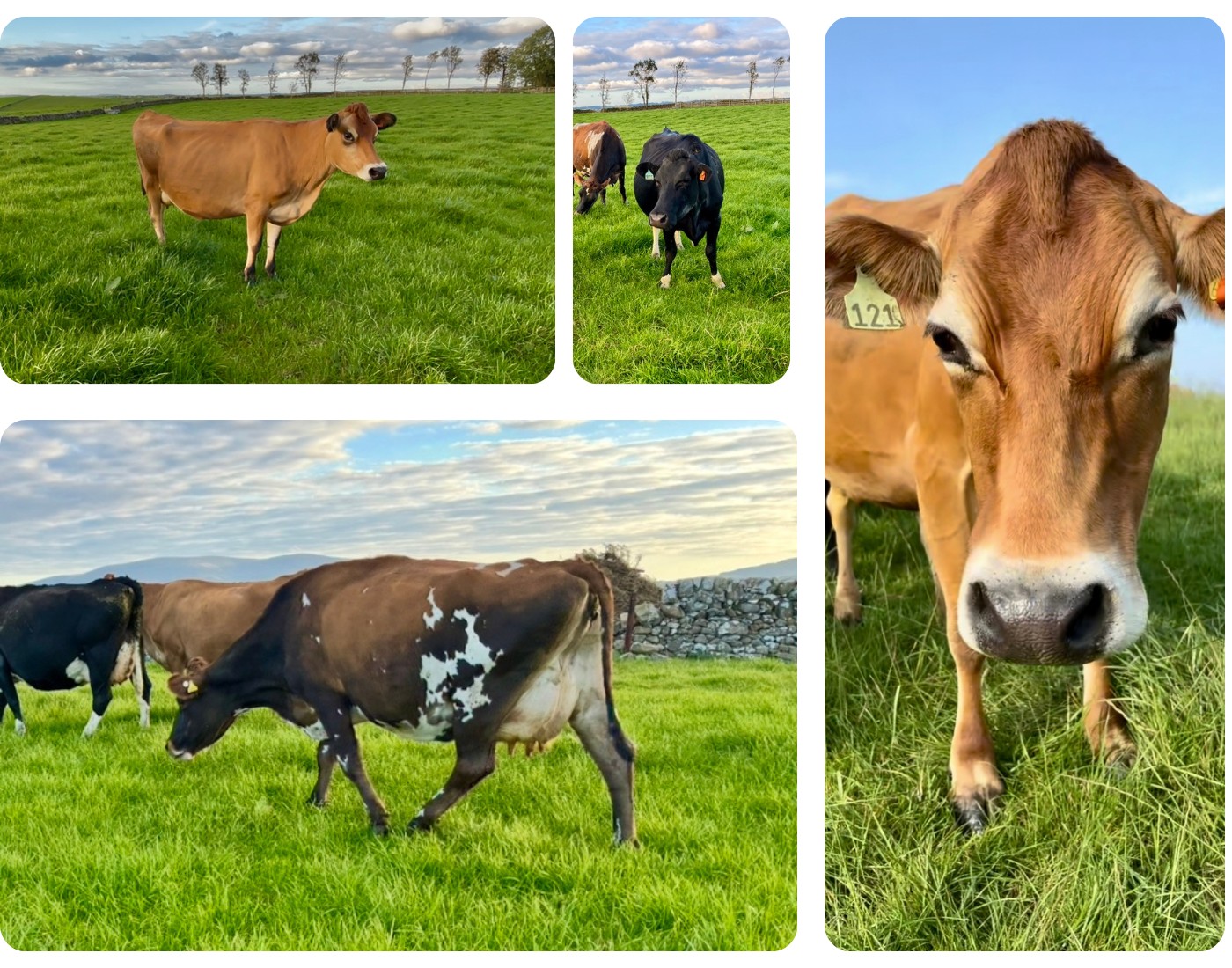
Breed: Jerseys typically produce milk with higher butterfat and protein percentages than Holsteins, although at a lower overall milk volume.
Stage of lactation: Milk solids are often slightly lower in early lactation and tend to increase as lactation progresses and milk volume naturally declines.
Diet: High-quality, energy-rich fresh grass supports higher milk solids, while poorer-quality forage or dietary imbalances can reduce them.
- Health and genetics: Genetics influence how consistently a cow produces milk with good butterfat and protein levels. Maintaining good udder health is just as important, as issues like mastitis can negatively affect milk quality, even if there are no obvious symptoms.
Butterfat and protein levels are regularly monitored through milk recording and bulk tank testing. This information helps us to:
Guide breeding decisions, by identifying cows that consistently produce higher milk solids
Fine-tune diets, particularly during periods when cows are not fully grazing fresh grass
Focus on milk quality, not just litres produced, because milk with higher butterfat and protein attracts a premium above the base milk price.
Monitoring milk solids allows us to make informed decisions that support cow health, milk quality and the overall sustainability of the farm.
In Summary
On a grass-based, spring-calving dairy farm, butterfat and protein are key indicators of milk quality and profitability. They’re directly linked to the cow’s diet, genetics and health — and play a big role in how milk is processed and valued. Managing for high milk solids helps make the most of grass, the farm’s most cost-effective feed and ensures a more efficient, sustainable system.